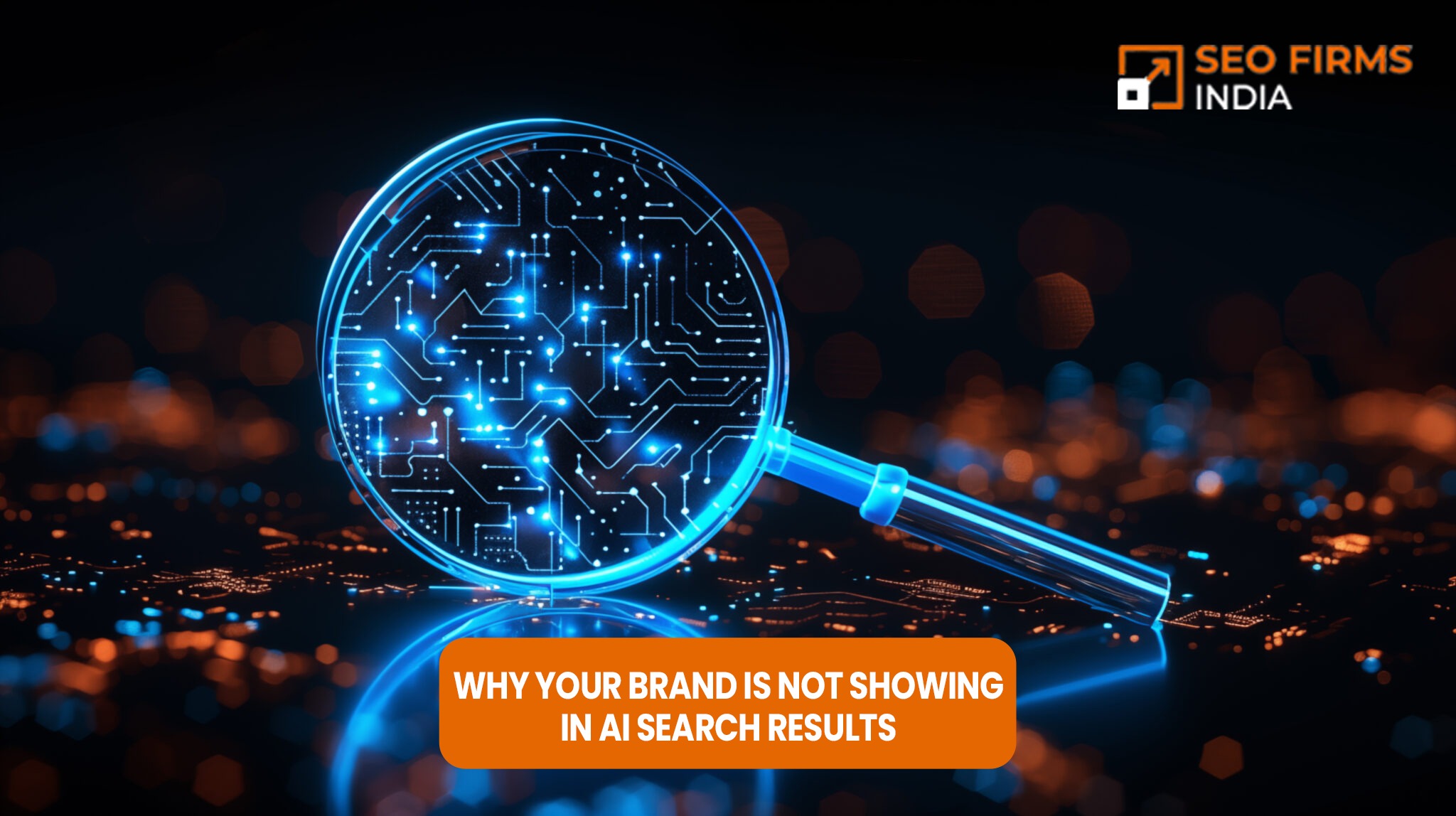
If your brand is not showing in AI search results, you are not alone. Many businesses are now trying to understand why competitors appear in AI answers while their own brand is missing.
When people search on Google, ChatGPT, Perplexity, or other AI tools, these platforms look for clear, trusted, and useful information. If your website does not explain your business properly, your brand may not be selected as a helpful answer.
If you are searching for brand visibility in AI search, you likely want more leads, better online visibility, and a website that actually supports your business goals.
The good news is that you do not need confusing technical terms to understand what matters. You need clear pages, helpful content, strong trust signals, and proper website indexing.
This guide explains the common reasons your brand may not be showing in AI search results and what you can fix first.
Your Website May Not Be Clear Enough
AI search tools need clear information. If your website does not explain what you do, who you help, where you serve, and why people should trust you, your brand may be hard to understand.
Many websites look nice but do not say enough. They use broad words like “best solutions” or “quality services,” but they do not explain the real offer.
For example, your website should clearly answer:
- What services do you provide?
- Who are your ideal customers?
- Which locations do you serve?
- What makes your business trustworthy?
- What should visitors do next?
Clear pages are better than fancy pages. Your homepage and service pages should help both users and search systems understand your business quickly.
Simple action step: Review your homepage and service pages. If a new visitor cannot understand your business in a few seconds, your messaging needs improvement.

Your Content May Be Too Thin
If your service pages only have a few lines of text, they may not be strong enough to compete in normal search or AI search.
Thin content also creates trust problems. A visitor may leave your website if they cannot understand your services, process, benefits, pricing style, or results.
To improve your content, add helpful sections such as:
- Service details
- FAQs
- Process explanation
- Case studies
- Customer reviews
- Before and after examples
- Clear calls to action
AI tools are more likely to understand and reference websites that provide useful, complete, and well-structured information.
Your Brand May Not Have Enough Authority
AI search results often depend on trusted sources. If your brand has very few online mentions, weak backlinks, no reviews, and limited content, it may not look strong enough.
Authority is built over time. It does not happen from one blog or one backlink. You need consistent trust signals across the web.
You can improve brand authority with:
- High-quality blog content
- Safe and relevant backlinks
- Business directory listings
- Customer reviews
- Case studies
- Press mentions
- Consistent brand details online
- Active social media profiles
The more trusted signals your brand has, the easier it becomes for search systems to connect your business with your services.
Your Pages May Not Be Indexed
If Google has not indexed your important pages, they cannot perform well in normal search or AI search. Indexing is the first step.
Common indexing problems include:
- Noindex tags
- Blocked robots.txt files
- Poor internal linking
- Duplicate pages
- Weak content
- Technical errors
- Slow website performance
- Incorrect canonical tags
Google Search Console can help you see which pages are indexed and which pages need attention.
If your important service pages are not indexed, your brand may miss valuable visibility opportunities.

Quick Checklist for AI Search Visibility
Use this checklist to review the most important areas of your website. You do not need to fix everything in one day. Start with the items that affect leads, visibility, and trust first.
- Clear homepage and service pages
- Strong About page
- Helpful blog content
- FAQs on important pages
- Good internal linking
- Google Search Console setup
- Indexed service pages
- Reviews and case studies
- Consistent business information
- Quality backlinks and brand mentions
- Clear contact details
- Strong calls to action
Common Mistakes to Avoid
Many businesses lose time and money because they repeat the same mistakes. Avoiding these mistakes can help your website perform better in both search and AI results.
Common mistakes include:
- Writing only short service descriptions
- Using unclear brand messaging
- Not checking indexing
- Ignoring reviews and proof
- Creating generic content
- Not updating old pages
- Not building brand mentions
- Focusing only on design and ignoring content
- Not tracking leads and conversions
Your website should not only look professional. It should clearly explain your business, build trust, and guide visitors to take action.
How to Know You Are Moving in the Right Direction
Good digital marketing should become easier to understand over time. You should know what was done, why it was done, and what changed because of it.
For SEO work, track:
- Keyword rankings
- Clicks
- Impressions
- Top-performing pages
- Indexed pages
- Leads
- Phone calls
- Form submissions
- Sales where possible
For paid marketing, track:
- Cost per lead
- Lead quality
- Conversion rate
- Wasted spend
- Best-performing ads
- Landing page performance

Frequently Asked Questions
Competitors may have stronger content, more brand mentions, better authority, clearer service pages, or stronger trust signals online.
No. You cannot force AI tools to mention your brand. The better approach is to become a clear, useful, and trusted source that search systems can understand.
Start with indexing, service page clarity, helpful content, and brand trust signals. These are the basic areas that support both normal search and AI search visibility.
Yes, helpful blog content can support AI search visibility when it answers real questions, explains topics clearly, and connects back to your services.
It depends on your website condition, content quality, competition, authority, and consistency. Most brands need steady SEO, content, and trust-building work over time.