
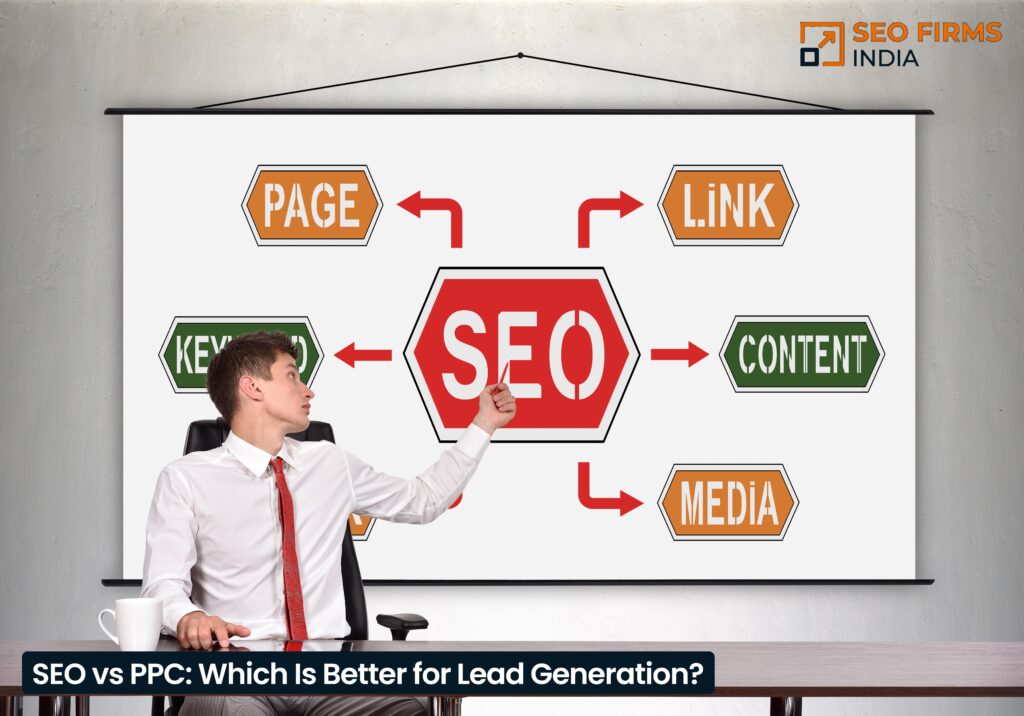
When businesses want more leads from Google, they often face one important question: should they invest in SEO or PPC?
The SEO vs PPC decision can feel confusing because both channels help businesses appear in search results, but they work in different ways.
SEO focuses on improving your website so it can appear in organic search results. PPC allows you to pay for advertisements that appear when people search for selected keywords.
SEO usually takes more time but can support long-term visibility. PPC can bring traffic more quickly, but it requires an ongoing advertising budget.
The right choice depends on your goals, timeline, budget, competition, and the type of leads you want. For many businesses, the most effective approach is not choosing only one. It is using SEO and PPC together as part of a complete lead generation strategy.
This guide explains SEO and PPC in simple language, compares their benefits, and helps you decide which option is right for your business.
What Is SEO?
SEO stands for search engine optimization. It is the process of improving your website so it can appear higher in unpaid search results.
When someone searches for a service or product, Google shows organic results below or around the paid advertisements. Businesses do not pay Google every time someone clicks an organic result.
SEO includes several areas, such as:
- Keyword research
- Website content
- Service page optimization
- Technical SEO
- Page speed
- Mobile usability
- Internal linking
- Local SEO
- Link building
- User experience
- Conversion tracking
The goal of SEO is to help search engines understand your website and show it to people searching for relevant services.
For example, a plumbing company may want to rank when someone searches for “emergency plumber near me.” An SEO strategy could improve the company’s local pages, service content, Google Business Profile, website speed, and authority.
How SEO Supports Lead Generation
SEO helps businesses attract people who are already searching for information, products, or services.
A strong SEO strategy can bring visitors through:
- Service-related searches
- Local searches
- Product searches
- Informational questions
- Comparison searches
- Problem-based searches
Some visitors may be ready to contact your business immediately. Others may be researching before making a decision.
SEO allows you to reach people at different stages of the customer journey.
For example, a business can create:
- Service pages for people ready to enquire
- Location pages for local customers
- Comparison pages for people reviewing options
- Blog posts for people researching a problem
- Case studies for people checking experience and results
This creates a long-term lead generation system that can continue bringing opportunities as your website visibility grows.
Benefits of SEO
SEO can provide several long-term benefits for businesses.
Long-Term Visibility
Once your pages begin ranking, they can continue bringing traffic without requiring payment for every click.
Rankings are not guaranteed to remain unchanged, but strong pages can generate traffic and leads for a long period when they are maintained properly.
No Cost for Each Organic Click
SEO still requires investment in strategy, content, technical work, and ongoing improvements. However, you do not pay the search engine for every organic visitor.
Builds Trust and Authority
Many users trust businesses that appear naturally in search results. Helpful content, strong service pages, reviews, and a professional website can improve confidence in your brand.
Reaches Customers at Different Stages
SEO can target people who are ready to buy as well as those who are still researching.
Supports Other Marketing Channels
Strong website content can also support email marketing, social media, sales conversations, and paid advertising.
Limitations of SEO
SEO is valuable, but businesses should understand its limitations.
SEO Takes Time
New websites and highly competitive industries may require several months of consistent work before meaningful improvements appear.
Results Depend on Competition
It may be harder to rank for competitive keywords if established businesses have stronger websites, more content, and greater authority.
SEO Requires Ongoing Work
Search behaviour, competitors, content, and search engine systems continue to change. SEO should be reviewed and improved regularly.
Rankings Alone Do Not Guarantee Leads
A page can rank well but still fail to generate enquiries if the content, offer, user experience, or call to action is weak.
What Is PPC?
PPC stands for pay-per-click advertising.
With PPC, businesses pay to display advertisements on platforms such as Google Ads or Microsoft Advertising. On social platforms, paid campaigns may also charge based on clicks, impressions, leads, or other actions.
In search advertising, businesses choose keywords that are related to their services. Their ads can then appear when users search for those terms.
You usually pay when someone clicks the advertisement.
A PPC campaign can include:
- Keyword selection
- Ad copy
- Audience targeting
- Location targeting
- Budget settings
- Landing pages
- Conversion tracking
- Bid management
- Negative keywords
- Campaign optimization
PPC gives businesses more direct control over when, where, and to whom their advertisements appear.
How PPC Supports Lead Generation
PPC can help businesses reach potential customers quickly.
For example, if a new law firm wants to attract enquiries for a particular service, it can create a Google Ads campaign targeting relevant searches in selected locations.
When the campaign is active, the advertisements may begin receiving impressions and clicks quickly.
PPC can be useful for:
- New businesses
- New service launches
- Seasonal promotions
- Competitive local markets
- Urgent lead generation
- Testing new offers
- Reaching specific locations
- Retargeting previous website visitors
However, getting clicks does not automatically mean getting quality leads. The campaign, targeting, offer, landing page, and tracking must all work together.
Benefits of PPC
Faster Visibility
PPC campaigns can begin generating traffic soon after they are launched and approved.
Clear Targeting Options
Businesses can target users by keyword, location, device, audience, schedule, and other campaign settings.
Budget Control
You can set daily or monthly budgets and adjust spending based on performance.
Fast Testing
PPC can help test keywords, offers, headlines, landing pages, and calls to action.
Measurable Performance
With proper conversion tracking, businesses can measure clicks, leads, conversion rates, cost per lead, and sales.
Useful for Competitive Keywords
PPC can help a business appear for important searches even when its organic rankings are not yet strong.
Limitations of PPC
Traffic Depends on Budget
When the advertising budget stops, paid traffic usually stops as well.
Costs Can Increase
Popular keywords can become expensive, especially in competitive industries.
Poor Setup Can Waste Money
Broad targeting, weak ads, irrelevant keywords, and poor landing pages can quickly waste advertising spend.
Lead Quality Can Vary
A campaign may generate a high number of leads but still perform poorly if those leads are irrelevant or unlikely to become customers.
PPC Needs Regular Management
Campaigns should be reviewed frequently to control costs, improve targeting, and remove wasted spend.
Which Is Better for Lead Generation?
Choose PPC When You Need Leads Quickly
PPC may be the better starting point when:
- You need traffic immediately
- You are launching a new business
- You are promoting a time-sensitive offer
- Your website does not rank yet
- You want to test a new service
- You have a clear advertising budget
- You need data about keywords and conversions
PPC can provide fast information about which searches, offers, and landing pages generate results.
Choose SEO for Long-Term Growth
SEO may be the better priority when:
- You want sustainable organic visibility
- You want to reduce dependence on advertising
- Customers regularly search for your services
- You can invest in content and website improvements
- You want to build authority in your industry
- You want traffic across multiple stages of the customer journey
SEO usually requires patience, but it can become a valuable long-term business asset.
Use Both When Possible
For many businesses, the strongest strategy is to use both SEO and PPC.
PPC can bring faster leads while SEO is developing. SEO can gradually create a more stable source of organic traffic.
Together, both channels can provide better coverage, stronger data, and more opportunities to reach potential customers.
How SEO and PPC Work Together
SEO and PPC should not be managed as completely separate activities. The information from one channel can improve the other.
1. Use PPC Data to Improve SEO
PPC campaigns can show which keywords generate clicks, leads, and sales.
You can use this information to:
- Select SEO keywords
- Improve service pages
- Create new landing pages
- Plan blog topics
- Understand search intent
- Prioritize high-value content
Instead of choosing SEO keywords based only on search volume, you can focus on terms that have already shown business value.
2. Use SEO Content in Paid Campaigns
Strong SEO content can support PPC campaigns.
Helpful service pages, case studies, guides, and FAQs can increase trust when users visit your website after clicking an advertisement.
A strong landing page can improve:
- User experience
- Conversion rate
- Lead quality
- Advertising efficiency
- Customer confidence
Sending paid traffic to a weak or unclear page can waste advertising spend.
3. Use Retargeting for Organic Visitors
Not every person who visits your website through SEO will contact you during the first visit.
Retargeting campaigns can show advertisements to people who previously visited your website.
This can help bring back users who:
- Read a blog
- Viewed a service page
- Checked your pricing
- Visited a product page
- Started but did not complete an enquiry
SEO attracts the visitor, while paid retargeting helps keep your business visible.
4. Increase Search Result Visibility
When a business appears in both paid and organic results, it can gain more visibility on the search results page.
Users may see:
- Your paid advertisement
- Your organic service page
- Your Google Business Profile
- Your review listings
- Your informational content
This wider presence can strengthen brand recognition and trust.
5. Test Offers Before Building SEO Pages
Creating and ranking an SEO page takes time.
PPC can help test whether an offer has demand before you invest heavily in long-term content and optimization.
You can test:
- Service offers
- Pricing messages
- Headlines
- Calls to action
- Locations
- Customer problems
- Landing page layouts
The best-performing information can then be used in your SEO strategy.
Quick SEO vs PPC Checklist
Use this checklist to decide how your business should use SEO and PPC:
- Use PPC when you need faster traffic
- Use SEO for long-term visibility
- Set clear lead generation goals
- Track cost per lead from PPC
- Track leads from organic traffic
- Measure lead quality from both channels
- Build strong landing pages
- Set up call and form tracking
- Use PPC conversion data for SEO keywords
- Use SEO content in retargeting campaigns
- Review sales, not only clicks
- Compare return on investment
- Keep improving both channels
You do not need to choose based on assumptions. Use clear tracking and real performance data.
Common SEO and PPC Mistakes to Avoid
Expecting Instant SEO Results
SEO takes time. Stopping after a few weeks can prevent the strategy from building momentum.
Running PPC Without Conversion Tracking
Without proper tracking, you may know how many clicks you received but not how many leads or sales came from the campaign.
Sending Ads to Weak Pages
A strong advertisement cannot fix a confusing, slow, or untrustworthy landing page.
Focusing Only on Traffic
More traffic is not always better. The main goal should be relevant visitors, qualified leads, and sales.
Ignoring Lead Quality
A low cost per lead may look positive, but it has limited value if the leads do not become customers.
Using the Same Message for Every Audience
Different users have different needs. Your keywords, advertisements, content, and landing pages should match their search intent.
Choosing One Channel Without Reviewing the Goal
SEO and PPC serve different purposes. Your decision should be based on your timeline, budget, market, and business goals.
How to Measure SEO and PPC Performance
Good lead generation should be easy to understand and measure.
SEO Metrics to Track
- Organic traffic
- Keyword rankings
- Search impressions
- Organic clicks
- Top landing pages
- Indexed pages
- Phone calls
- Form submissions
- Organic leads
- Organic sales
- Conversion rate
PPC Metrics to Track
- Advertising spend
- Impressions
- Clicks
- Click-through rate
- Conversion rate
- Cost per click
- Cost per lead
- Lead quality
- Sales
- Return on advertising spend
- Wasted spend
Do not judge success using one number alone.
A high-ranking page may generate no enquiries. A PPC campaign may receive many clicks but very few qualified leads. A low-cost lead may never become a customer.
Review the full journey from search and click to enquiry and sale.
Frequently Asked Questions
SEO does not charge you for each organic click, but it still requires investment in strategy, technical work, content, optimization, and authority building. PPC requires an ongoing advertising budget in addition to campaign management.
PPC can help new businesses get visibility and test offers quickly. However, new businesses should also start SEO early because organic growth usually takes time.
Yes. Many businesses achieve stronger results when SEO and PPC support each other. PPC can generate faster data and traffic, while SEO builds long-term visibility.
The timeline depends on your website, competition, location, industry, content, and current authority. Some improvements may appear earlier, while competitive campaigns can take several months.
A PPC campaign can begin receiving traffic shortly after launch, but profitable lead generation may require testing and optimization.
Both channels can generate high-quality leads when targeting, messaging, landing pages, and tracking are handled properly. Lead quality depends more on strategy and search intent than on the channel alone.
A small business that needs immediate enquiries may begin with a controlled PPC campaign while starting SEO at the same time. The exact approach should depend on its budget and timeline.